The small-step series · 01
Check your blood pressure at home.
One visual guide to a better setup, more useful readings, and knowing when to get help.
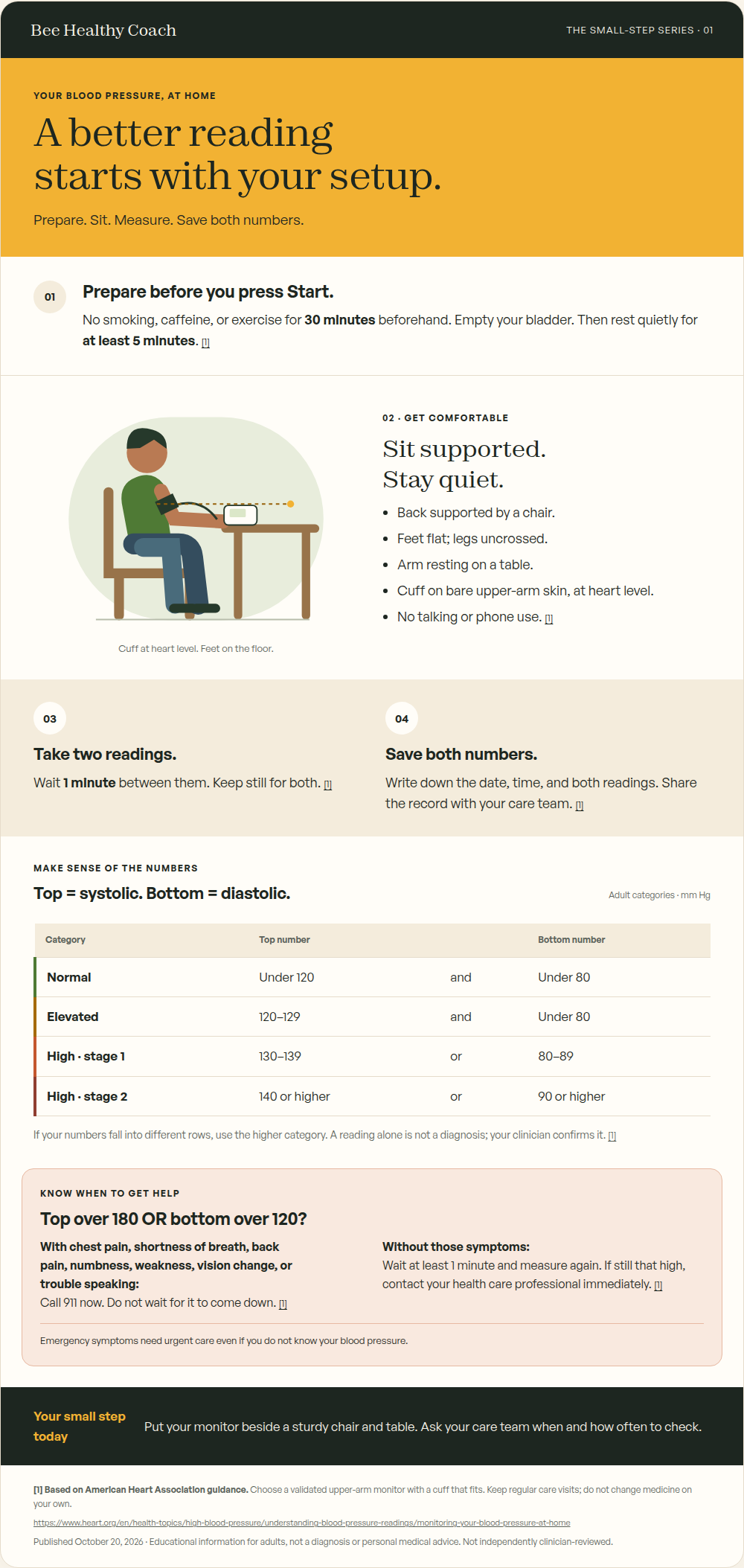
Free PNG · No sign-up needed · For adults
YOUR BLOOD PRESSURE, AT HOME
A better reading
starts with your setup.
Prepare. Sit. Measure. Save both numbers.
Prepare before you press Start.
No smoking, caffeine, or exercise for 30 minutes beforehand. Empty your bladder. Then rest quietly for at least 5 minutes. [1]
Cuff at heart level. Feet on the floor.
02 · GET COMFORTABLE
Sit supported.
Stay quiet.
- Back supported by a chair.
- Feet flat; legs uncrossed.
- Arm resting on a table.
- Cuff on bare upper-arm skin, at heart level.
- No talking or phone use. [1]
Save both numbers.
Write down the date, time, and both readings. Share the record with your care team. [1]
MAKE SENSE OF THE NUMBERS
Top = systolic. Bottom = diastolic.
| Category | Top number | Bottom number | |
|---|---|---|---|
| Normal | Under 120 | and | Under 80 |
| Elevated | 120–129 | and | Under 80 |
| High · stage 1 | 130–139 | or | 80–89 |
| High · stage 2 | 140 or higher | or | 90 or higher |
If your numbers fall into different rows, use the higher category. A reading alone is not a diagnosis; your clinician confirms it. [1]
KNOW WHEN TO GET HELP
Top over 180 OR bottom over 120?
With chest pain, shortness of breath, back pain, numbness, weakness, vision change, or trouble speaking:
Call 911 now. Do not wait for it to come down. [1]
Without those symptoms:
Wait at least 1 minute and measure again. If still that high, contact your health care professional immediately. [1]
Emergency symptoms need urgent care even if you do not know your blood pressure.
Put your monitor beside a sturdy chair and table. Ask your care team when and how often to check.
The text version
A calmer routine, step by step.
Use an automatic, validated upper-arm monitor with the right cuff size. Bring it to an appointment so your care team can check your technique and its accuracy. American Heart Association.
- Prepare: Avoid smoking, caffeine, and exercise for 30 minutes. Empty your bladder, then rest quietly for at least 5 minutes.
- Sit: Back supported, feet flat, legs uncrossed. Rest your arm on a table with the middle of the cuff at heart level. Keep the cuff on bare skin.
- Measure: Do not talk or use your phone. Take two readings, one minute apart.
- Record: Save both readings with the date and time. Ask your care team how often to check.
These steps follow the AHA home-monitoring guide. Home readings do not replace regular care. Do not stop or change prescribed medicine based on this guide.
What your numbers mean
Normal is a top number under 120 and a bottom number under 80. Elevated is 120–129 and under 80. Stage 1 is 130–139 or 80–89. Stage 2 is 140 or higher or 90 or higher. Use the higher category when the two numbers differ. A clinician confirms the diagnosis. AHA categories.
When to get helpIf your top number is over 180 or your bottom number is over 120 and you have chest pain, shortness of breath, back pain, numbness, weakness, vision change, or trouble speaking, call 911 immediately. If you have no such symptoms, wait at least one minute and recheck; if still that high, contact your health care professional immediately. Do not delay emergency care for symptoms while trying to get a reading. AHA emergency guidance.
Sources and editorial note
- American Heart Association: Home Blood Pressure Monitoring (last reviewed by AHA August 14, 2025).
- AHA: Home Blood Pressure Measurement Instructions (PDF).
Checked against the linked guidance October 20, 2026. Original Bee illustration and layout; no AHA endorsement implied. This guide has not received independent clinical review. Your own care plan, including guidance for pregnancy, may differ.