Blood pressure at home: how to check it right and what the numbers mean
A step-by-step guide to accurate home readings, the 2025 blood pressure categories, and daily habits that help bring your numbers down.
Prefer a visual guide?Read, download, or print our free blood pressure infographic.
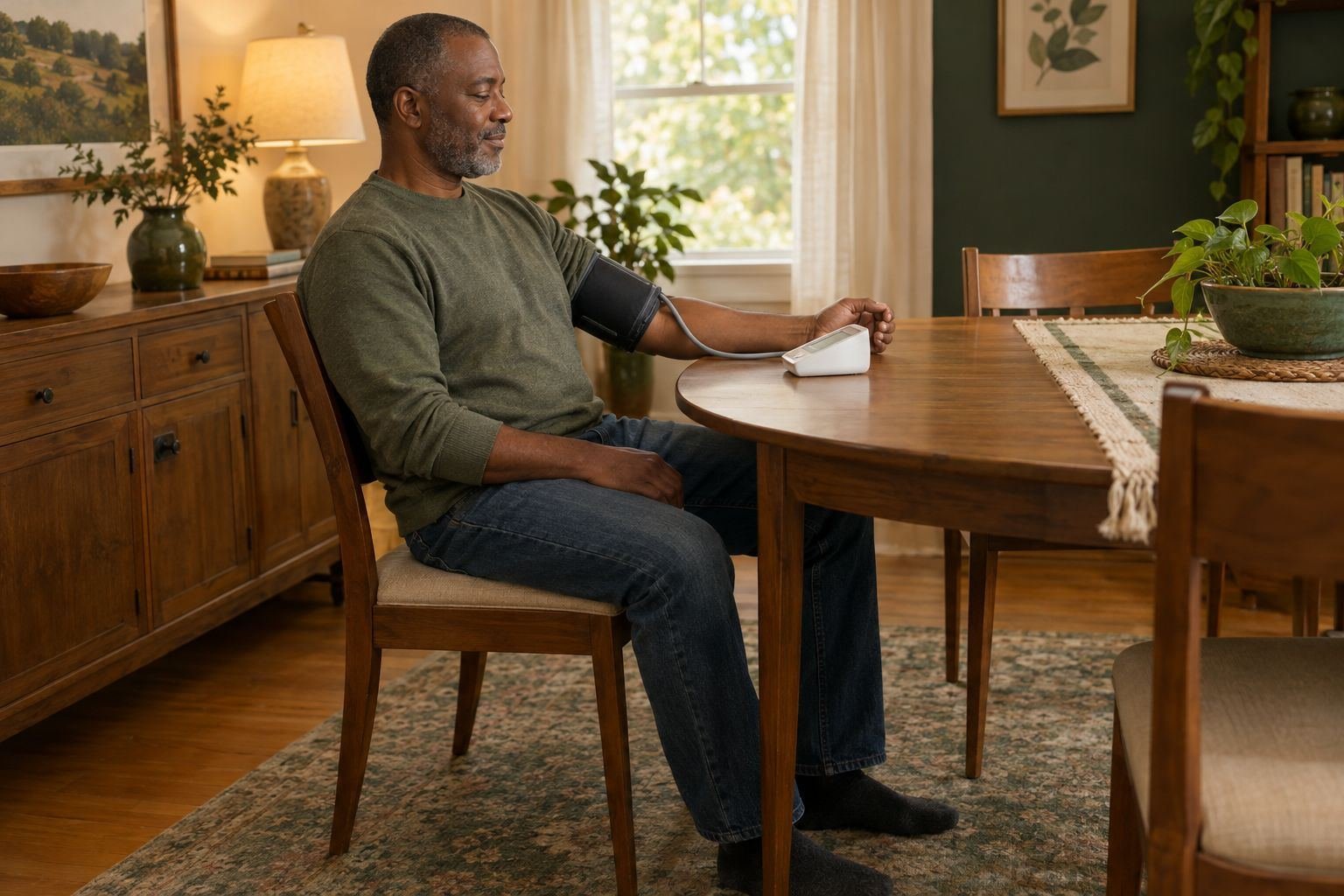
- Rest 5 minutes, sit with your back supported and feet flat, and keep your arm at heart level.
- Take two readings, 1 minute apart, and write them down.
- Under 120/80 is normal. 130/80 or higher is high blood pressure.
- Less salt, more movement, and the DASH eating plan can all help.
Why check at home?
Your blood pressure changes all day. A single reading at the doctor's office may not show the full picture. Some people read high at the doctor because they're nervous. Others read normal at the doctor but high at home. Home readings give you and your doctor more information.
The numbers, explained
Blood pressure has two numbers. The top number (systolic) is the pressure when your heart beats. The bottom number (diastolic) is the pressure between beats. Here are the categories from the 2025 American Heart Association and American College of Cardiology guideline:
| Category | Top number | Bottom number | |
|---|---|---|---|
| Normal | Under 120 | and | Under 80 |
| Elevated | 120–129 | and | Under 80 |
| Stage 1 high blood pressure | 130–139 | or | 80–89 |
| Stage 2 high blood pressure | 140 or higher | or | 90 or higher |
Doctors don't diagnose high blood pressure from one reading. They use an average of 2 or more readings taken on 2 or more different days.
How to get an accurate reading
Small mistakes can throw off your numbers. The American Heart Association and American Medical Association suggest these steps:
Before you start
- No coffee, exercise, or smoking for 30 minutes before.
- Wait at least 30 minutes after a meal.
- Use the bathroom first.
- If you take blood pressure medicine, measure before you take it.
While you measure
- Sit quietly for 5 minutes first.
- Keep your back supported, feet flat on the floor, and legs uncrossed.
- Rest your arm on a table so the cuff is at heart level.
- Put the cuff on your bare upper arm, not over a sleeve.
- Don't talk.
- Take two readings, 1 minute apart, and write them all down.
When to call 911If your top number is over 180 or your bottom number is over 120 and you have chest pain, shortness of breath, back pain, numbness, weakness, vision change, or trouble speaking, call 911 immediately. Without those symptoms, wait at least one minute and measure again; if still that high, contact your health care professional immediately. Emergency symptoms need urgent care even if you do not know your blood pressure. AHA guidance.
Choosing a monitor and an app
- Pick a monitor with an upper-arm cuff. Wrist and finger monitors are usually less accurate.
- Make sure the cuff fits your arm. A cuff that's too small or too big can give wrong readings.
- Bring your monitor to your next appointment so your doctor or nurse can check it against theirs.
- If you use an app, choose one that lets you share a simple report with your doctor and lets you delete your data.
Daily habits that help
- Cut back on salt. The American Heart Association recommends no more than 2,300 mg of sodium a day, with an ideal goal of 1,500 mg for most adults. Cutting back by even 1,000 mg a day can help. More than 70% of the sodium we eat comes from packaged, prepared, and restaurant foods.
- Try the DASH eating plan. Research funded by the National Heart, Lung, and Blood Institute shows the DASH diet lowers blood pressure, especially with less sodium. It's full of fruits, vegetables, whole grains, beans, and low-fat dairy.
- Move most days. Adults should aim for at least 150 minutes a week of moderate activity, like brisk walking, according to the Physical Activity Guidelines for Americans.
- Keep taking your medicine. Healthy habits work alongside medicine, not instead of it. Never stop or change a medicine without talking to your doctor.
This article is for general education and isn't medical advice. Talk with your doctor before making changes to your care.